First Impressions Aren’t Vibes. They’re Signals.
 Tiffany Hill Allen
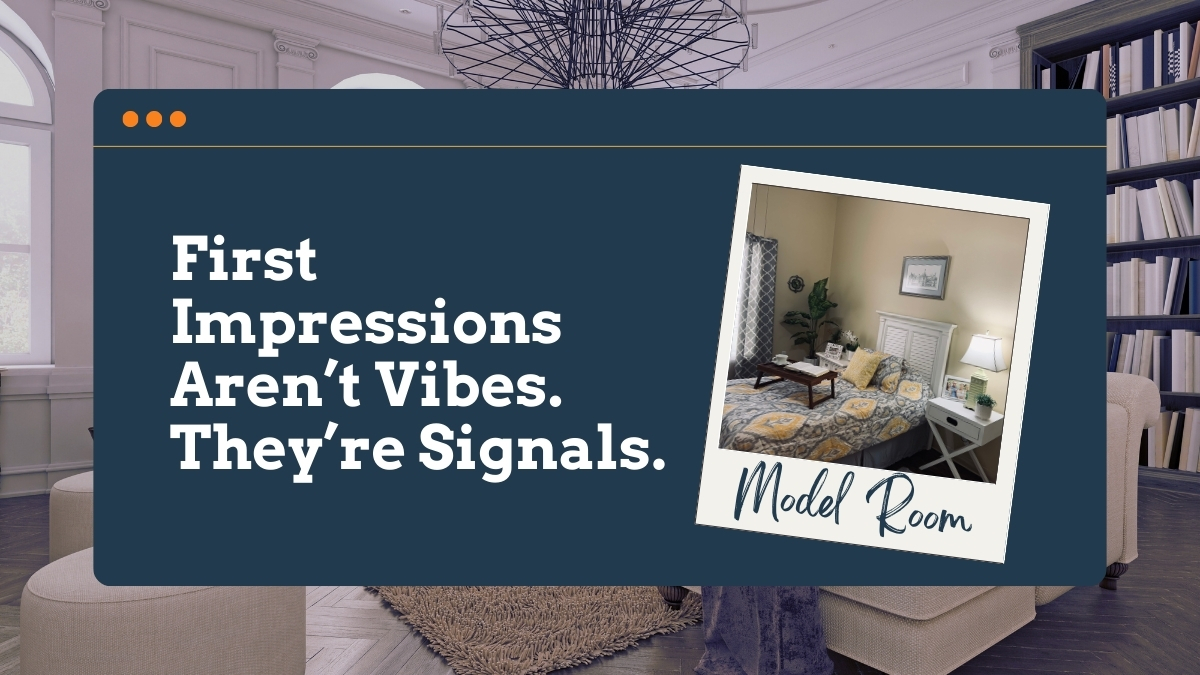
How the first impression of your senior living community signals your standard of care to families, whether it is true or not.
I want to start with a moment I’ve seen play out more times than I can count.😬
A family walks in. They’re polite. They’re listening. They’re nodding.
And yet…something quietly shifts before the visit is even halfway done.
Here’s the pattern I was seeing: The team genuinely cared. They were trying. They were trained over and over…
“Just make a good first impression.” But no one ever slowed down to explain what that actually meant to their team in real life.
And here’s the quiet truth people don’t say out loud:
Families decide whether they trust you long before they decide whether they like you.
The Real Issue No One Names
The problem isn’t that senior living teams don’t want to make a good first impression. It’s that a “good first impression” is treated like a vibe instead of a standard of care with protocols. And when something isn’t standardized, it’s impossible to execute consistently.
When expectations aren’t clearly defined, your team fills in the gaps with their own version of “good.” And those versions are shaped by their background, experience, and personal habits.
I’ve watched teams lose trust during the prospect visit because of small, preventable details. And it was not because they didn’t care, but because they didn't understand what families or prospective residents were actually paying attention to.
That gap costs confidence in your product, services and ability to deliver on your promises.
And...confidence is everything in this business.😏
Why Does This Keep Showing Up?
This issue repeats itself for a few reasons.
First...No predetermined systems.
Most communities don’t have a shared, visible definition of what “ready for company” looks like. Without that, consistency breaks down.
Second... A misguided mindset.
There’s a belief that families focus on big things first: amenities, care, pricing. In reality, people start with their senses...what they see, hear, smell, and feel.
Third, Performing hustle habits.
We normalize being busy. We walk past the same things every day and stop seeing them. Familiarity creates blindness and that’s human.
None of this means you’re doing something wrong.
It means you’re operating without a lens that families are using.
And, this will impact your ability to get move ins.
What Actually Works Instead
Here’s what I teach and what I’ve seen work across communities of all sizes. It isn’t complicated, but does require intention.
Define first impressions in observable terms, not vague language
Train teams to scan the space like a guest, not like an employee
Pay attention to what people experience before you start talking
Treat the environment as part of care not decoration
Fix small things early, before they become trust issues later
Encourage awareness and consistency with your team.
When teams know what to look for, they start seeing things differently. Then, it becomes a part of the community’s culture.
The Shift You Should Consider
Understand that families don’t separate sales, care, environment, and trust into neat categories. They experience all of it at once AND they draw conclusions fast.
Like...really fast.🫣
When the space feels cared for, families believe their loved one will be too. When the details are ignored, confidence erodes…even if the care is solid.
Remember, that trust isn’t built through words alone. It is built brick by brick with actions attached.😉
Turning the Tide Moment
📌 Here’s a few thoughts I’ll leave you with:
Families aren’t looking for perfect communities. They’re looking for places that pay attention.
So the question isn’t, “Does this look good enough?”
It’s, “What story is this space telling before I ever open my mouth?"
Answers to Questions I've Received…
What do families notice first when touring an assisted living community?
They notice how the space feels...cleanliness, smells, light, noise, and energy...often before they consciously evaluate care or pricing.
Why do small details matter so much in this business?
Because families use small details to predict bigger outcomes. If little things are missed, trust in your standard of care starts to wobble.
Are first impressions only about caregiver and prospective resident visits (aka tours)?
No. Residents and families keep noticing after move-in. Consistency over time is what protects trust and most importantly…retention.
Want to dive deeper in the "First Impressions" conversation?
Listen and follow the Start With Occupancy Podcast.
Inspire Change | Impact Lives | Improve Outcomes
Categories: : podcast episode, sales