Food Is Not a Perk: How Dining Quietly Drives Assisted Living Move-Ins
 Tiffany Hill Allen
Menu options are an often overlooked driver of satisfaction and move-ins in assisted living. Here’s how dining quietly impacts resident satisfaction,
Why Your Dining Program Impacts Senior Living Occupancy More Than You Think
A quiet truth no one says outloud...🤫
“Tiffany! At this age, we have three things to look forward to, breakfast, lunch, and dinner.” Teeth clinched. Fist balled. Deep frustration.
These words were shouted to me across the dining room from a resident while I was working manager-on-duty on a Saturday. He was not happy with the presentation, temperature and the menu choice.
Needless to say, that was a rough day. However, his words and the sentiment behind them never left me. The dining experience is one of the most overlooked marketing tools in senior living.
And...one of the most powerful.
Across almost every independent or assisted living community I’ve ever stepped into, the number one complaint from residents wasn't care, activities or staffing. It’s the food. Not always because it’s terrible, but because it felt thoughtless. Random. Bland (figuratively and literally).
Residents may not say it loudly, but they say it consistently: food matters more than anyone wants to admit.
Here’s the thing, retaining the residents you already have also matters. When food feels rushed, repetitive, or disconnected from the people eating it, dissatisfaction grows quietly and then retention suffers. So let’s talk about how the dining experience actually works…not as a perk, but as a strategy.
The Real Issue
Food is often treated like a line item instead of a lived experience.
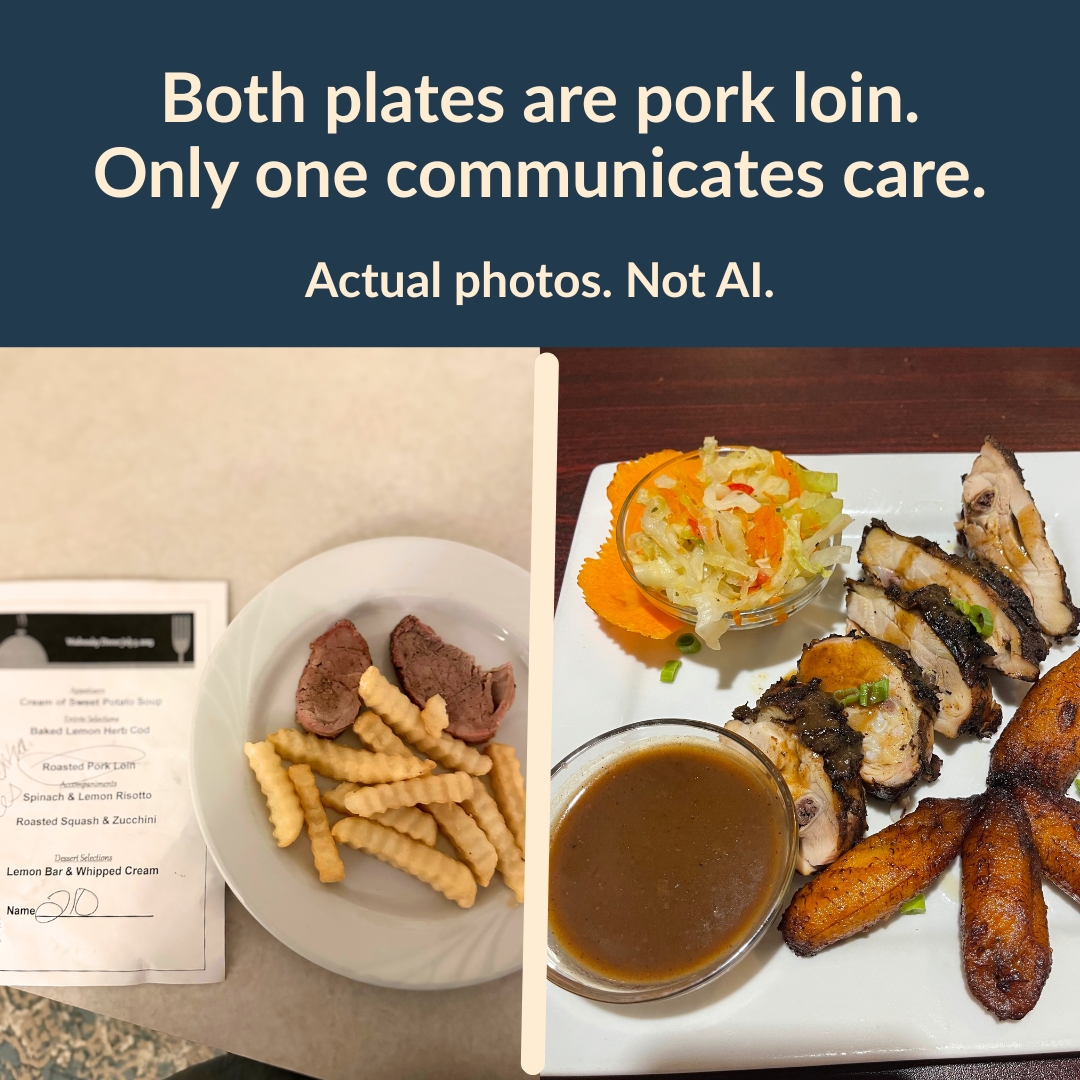
But most people, like me, eat with our eyes first. You can serve the best meal in the world. But if it looks unappealing, it won’t be appetizing. I always reminded the staff that residents are paying their lifetime accumulation of earned money to live in our community. They deserve food that looks AND tastes good.
I’ve worked in communities where everything was canned or processed and residents were paying goooooood money. I mean…good, good, good money.
In my work with new owners purchasing existing assisted living communities, I’ve seen this firsthand. More than once, they’ve discovered that residents were being served what I’ll simply call it for what it was: SLOP.🤮
Beans and franks should not be the standard fare for residents. I’m just saying. Not for memory care residents. Not for Medicaid as a payor source residents. No one.
Dignity is NOT dependent on budget or cognition.
Why This Keeps Showing Up?
This continues to happen because menus are rarely designed with intention. It is designed for compliance.
In many communities, menus are built around convenience, habit, or budget alone. Dining becomes operational instead of relational. Compliance replaces creativity. The most successful communities I’ve seen don’t necessarily spend more on food. They think more about how to create an experience with it. They treat dining as part of the resident experience, not something to “get through.”
Convenience over quality as a standard is not acceptable. The mission should be quality over convenience.
You don’t need to serve lobster dinners, but you do need intention:
Fresh ingredients when possible
Creative use of herbs and spices
Thoughtful preparation
Desirable presentation
What Actually Works Instead
Here’s what I’ve seen work…and what I teach owners and operators to rethink:
Give residents a voice.
Resident meetings aren’t just a requirement (in the state of Florida it is), they’re an opportunity. Ask what they miss, what they grew up eating, what feels like “home”. In residential assisted living settings, this can happen weekly, not monthly.Create something to look forward to.
Theme nights matter. Italian dinners. Southern comfort food. Pizza night. These aren’t gimmicks. They create anticipation in what is now someone’s home.Turn meals into experiences.
Guest cooks or chefs, especially in small to mid-sized communities can transform dining into an event. Cooking demonstrations, featured meals, or something simply different from the norm builds engagement. People bond around food. And yes, this is also smart marketing.Invite families into the experience.
Special dining nights where families eat with residents strengthen connection and trust. Families experience the care firsthand. No sales pitch required. Another, great marketing opportunity (pssst..get your family referrals here 😉).Respect presentation.
Food doesn’t need to be fancy, but it should look enticing. Ask yourself, "Would I pay $4K-$10K per month and be happy with a plate presented in that manner?" They deserve meals that look and taste good. I can’t say this enough.Choose quality over convenience.
Convenience meals such as the example given earlier should not be the standard regardless of payer source or cognition. Herbs, spices, and thoughtful preparation go a loooooong way.
The communities that do dining well do one thing differently, they give residents a voice and a real buy-in.
Treat feedback as a gift.
The Shift You Should Consider
The dining experience isn’t just about nutrition.
It’s about dignity.
It’s about trust.
And yes...it’s about occupancy.
Families notice dining sometimes before they ask pricing questions. Your menu is a quiet indicator of standards, care, and respect. When you design your menu and the resident experience with intention, marketing becomes easier, prospective resident and family visits feel more authentic, and connections build naturally.
This isn’t about restaurant-style dining.
It’s about leadership. It’s about care.
Turning the Tide Moment
Food is not a perk.
The communities that stand out aren’t always the biggest or the most expensive. They’re the ones that think differently about what really matters. And that’s where REAL occupancy growth begins.
Answers to Questions I’ve Received…
Can small assisted living homes really do this well?
Yes. In many cases, smaller homes can deliver more personalized, dining experiences than larger communities. Think gluten free, vegetarian, vegan, cultural meals and resident favorites. The dining experience then becomes a part of your value proposition. This is where a smaller home can truly stand out.
Does improving food really impact move-ins?
Most definitely! It is often one of the first emotional decision factors for families and residents. This is why I highly encouraged my team to invite prospective residents to experience the meal. It reveals the culture of the community as well (but that’s for another blog 😉).
What should I budget for food costs?
In senior living, food budgeting is typically based on a daily cost per resident, not a flat monthly guess. This is called PRD — Per Resident Day. It tells you how much it truly costs to feed one resident, for one day, based on your real operating numbers. And until you know that number, you’re not budgeting. You’re estimating, which can be costly.
If this helped you see dining and leadership a little differently, you’re exactly who I write Turning the Tide for. Take what you need. Share what helps. Come back for more.
And, if you’re serious about building a care home business that actually works financially and operationally, this is the level of mentorship inside the Compass Rose XL accelerator program.
It is for new owners within the last two years or whose occupancy is under 50% and don’t want to continue to “see how it goes.”
They want to build it right.
👉 If that’s you, Compass Rose XL was created for you.
Listen and follow the Start With Occupancy Podcast.
Inspire Change | Impact Lives | Improve Outcomes
Categories: : marketing